Luna Moth Lace Poncho Free Pattern: Beginner Crochet Guide
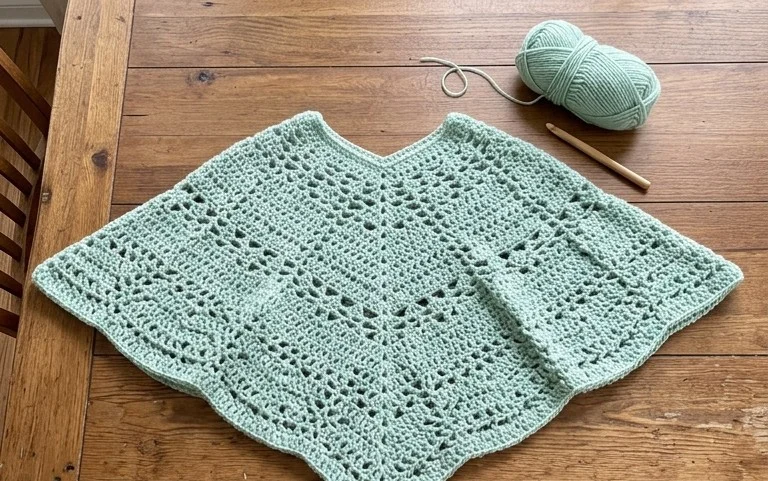
Draping this garment over your shoulders feels like wearing a soft, open-work cloud that moves with your body while providing just enough warmth for a summer evening breeze. The design features a delicate, moth-wing motif that keeps the fabric light and airy, avoiding that heavy or stifling feeling common in thicker wraps. Beginners find the repeated stitch patterns rhythmic and simple to memorize, while experienced makers appreciate the elegant drape achieved with basic yarn weights. You will learn how to build the foundation, manage the eyelet spaces, and join the sides properly to create a flattering shape that fits a variety of body types.
Why You’ll Love This Pattern
This classic crochet dishcloth is designed using the linen stitch, which creates a dense yet flexible fabric that excels at scrubbing dishes. Because it uses only single crochet and chain stitches, it serves as a meditative, repetitive project that is easy to pick up and put down. The dense texture holds soap suds well, making it more efficient than standard mesh cloths. It is also an excellent way to use up leftover cotton yarn from larger projects.
I finished this dishcloth in one evening while watching a movie. The texture is much sturdier than a basic double crochet pattern and it holds up perfectly in the wash.
— Sarah, home crafter
Pattern Overview & Skill Level
- Skill Level: Beginner
- Approximate Time: 1 to 2 hours
- Construction: Worked in flat rows using the linen stitch technique, finished with a simple border.
- Finished Dimensions: 8 inches by 8 inches square.
Materials & Supplies Needed
- Yarn: Worsted weight (#4), 100% cotton, approximately 60 yards.
- Hook Size: 5.0 mm (H-8).
- Notions: Tapestry needle for weaving in ends, scissors, and an optional locking stitch marker to track rows.
- Safe Yarn Substitutions: Use any worsted weight cotton or cotton-linen blend. Avoid acrylic, as it does not absorb water effectively for dishwashing. Changing to a lighter weight yarn will require increasing the starting chain count to maintain the 8-inch width.
Stitch Guide & Abbreviations (US Terms)
- ch: chain
- sc: single crochet
- st: stitch
- sk: skip the next stitch
- sp: space (the gap created by a ch-1)
- Linen Stitch: Also known as moss stitch; a sequence of sc, ch 1, skip 1.
Step-by-Step Pattern Instructions
Main Cloth
- Foundation: Ch 32.
- Row 1: Sc in 4th ch from hook, *ch 1, sk 1, sc in next ch; repeat from * across. Turn. (16 sc, 15 ch-1 spaces).
- Row 2: Ch 2 (counts as ch 1), sk first sc, sc in next ch-1 sp, *ch 1, sk 1 sc, sc in next ch-1 sp; repeat from * across to last ch-2 sp, sc in ch-2 sp. Turn. (16 sc, 15 ch-1 spaces).
- Rows 3–30: Repeat Row 2 until the piece measures approximately 8 inches from the starting edge.
Border & Finishing
- Border: Do not fasten off after the final row. Ch 1, turn the cloth to work along the side edge. Work 1 sc into the end of every row across the side. In each corner, work 3 sc to maintain a flat edge. Repeat this for all four sides of the square.
- Joining: Join with a sl st to the first sc of the border. Fasten off and leave a 6-inch tail.
- Weaving Ends: Use a tapestry needle to weave the starting and ending tails back and forth through the stitches on the back side of the cloth to secure them. Trim excess yarn.
Care & Washing Instructions
- Machine wash in warm water on a gentle cycle to remove oils and food residue.
- Lay the dishcloth flat on a towel to air dry, as high heat in a machine dryer may cause the cotton to shrink.
- Reshape the square by pulling gently on the corners while damp to ensure it remains uniform after washing.
Pro Tips & Common Mistakes to Avoid
Maintain consistent tension throughout the project, as the linen stitch can become uneven if you pull the chain stitches too tightly. Use a stitch marker at the start of every row to ensure you do not accidentally skip the last stitch or the turning chain, which is a common error that causes the edges to slant. Weave your ends in multiple directions—horizontally, vertically, and diagonally—to prevent them from unraveling during frequent use and washing. If you decide to adjust the size, remember that an odd number of total stitches in your foundation chain is required to keep the linen stitch pattern symmetrical.
Frequently Asked Questions
Can I use a larger hook for this pattern?
Yes, you can use a 5.5 mm hook if you have a tight natural tension. Using a larger hook will make the fabric drapier and slightly larger, which may require you to work fewer rows to reach the 8-inch mark.
Is it okay to sell the items I make with this pattern?
You are welcome to sell physical dishcloths made from this pattern. However, you may not redistribute, sell, or claim the written pattern or instructions as your own property.
Why does my dishcloth have a slanted edge?
Slanting usually occurs when you accidentally increase or decrease at the end of a row. Always count your sc stitches and ensure you are working into the ch-1 spaces created in the previous row, not into the stitches themselves.
How do I make the dishcloth larger?
To increase the size, add stitches to your foundation chain in multiples of 2. If you start with 40 chains instead of 32, you will increase the width by approximately 2 inches.
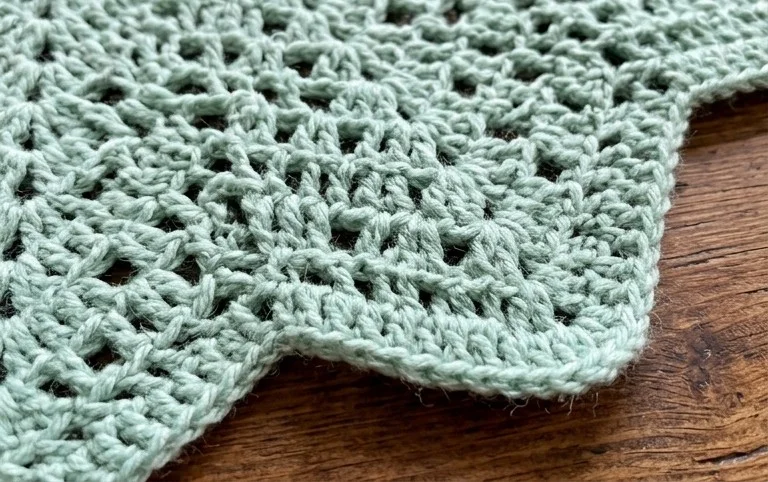
This wrap becomes a staple piece in any wardrobe once you complete the final trim. You might experiment with a mohair blend if you prefer a fuzzy, ethereal halo effect, or simply stick to standard cotton for a crisp look. Posting your finished piece on social media helps other makers see how different color choices change the overall appearance. Explore the rest of the blog for more garment designs and seasonal projects that use similar techniques to build your growing collection of handmade clothing items.