35 Free Christmas Quilt Patterns to Crochet This Year
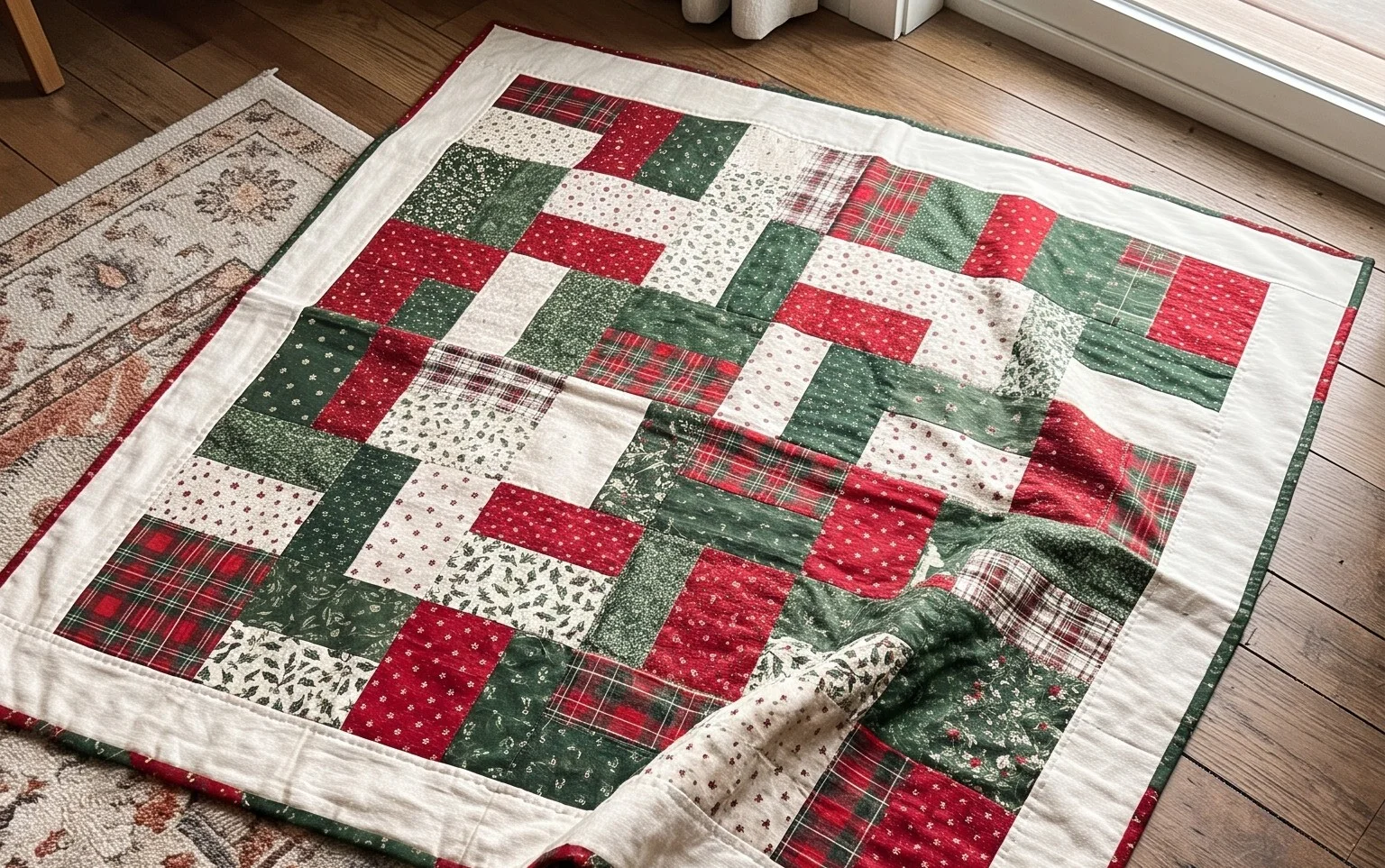
Rows of red, cream, and evergreen squares give a Christmas quilt a warm patchwork look, while the soft yarn makes it comfortable to drape over a sofa or fold at the end of a bed. These crochet quilt designs suit makers who enjoy working one motif at a time, including beginners ready to practise basic stitches and color changes. They also make thoughtful handmade gifts for anyone who brings out holiday blankets as soon as the weather turns cold. In this collection, you’ll find ideas ranging from simple blocks to festive motifs, with options for different skill levels and tastes. You’ll also see how stitch choices, color placement, and joining methods shape the finished surface, so you can choose a project that fits your time and supplies.
Why You’ll Love This Pattern
A firm cotton dishcloth with a close single-crochet fabric is useful at the sink and simple to wash after use. This beginner-friendly pattern works flat in straight rows, so you can practise even tension without tracking increases or shaping. One ball of worsted cotton is usually enough, and the plain stitch makes it a practical project for using leftover cotton yarn. The finished cloth measures about 23 × 23 cm, a handy size for washing dishes or wiping counters.
It is also easy to keep your place: every row has the same 32 stitches. Work a few rows at a time when you have a spare moment, and use the repeated stitch pattern to settle into a steady rhythm.
The rows were easy to count, and the cotton made a sturdy cloth that held its shape after washing. I finished it in an evening.
— Mara, beginner crocheter
Pattern Overview & Skill Level
- Skill Level: Beginner. You need to make a chain and single crochet.
- Approximate Time: About 2–3 hours, depending on your pace and experience.
- Construction: Worked flat in 36 rows of single crochet, then fastened off and woven in.
- Finished Dimensions & Sizing: About 23 × 23 cm (9 × 9 in) after washing and drying flat, using the gauge below. Individual results vary with tension and yarn.
Materials & Supplies Needed
- Yarn: Approximately 45–55 g, or 90–110 yd, of worsted-weight (#4) 100% cotton yarn. Choose one color, or use cotton scraps of similar thickness for stripes.
- Hook: 5.0 mm (US H-8). Use a hook that gives you a firm, flexible fabric without making the stitches hard to work.
- Notions: Tapestry needle for weaving in ends, scissors, and a ruler or tape measure. A stitch marker is optional for marking the first stitch of a row.
- Gauge: 14 single-crochet stitches and 16 rows measure 10 × 10 cm (4 × 4 in) after washing and drying flat. Make a small swatch first; adjust your hook if it is too large or too small.
- Substitutions: Use another washable, plant-fiber worsted yarn, such as a cotton-linen blend, if its label recommends a compatible hook. Avoid acrylic for a dishcloth because it is less absorbent. A thicker yarn or larger hook makes a larger, looser cloth and may use more yarn; a thinner yarn usually makes a smaller one.
Stitch Guide & Abbreviations (US Terms)
- ch: Chain. Yarn over and pull through the loop on your hook.
- sc: Single crochet. Insert the hook into the stitch, yarn over and pull up a loop, yarn over and pull through both loops on the hook.
- st(s): Stitch(es).
- rep: Repeat.
- turn: Rotate your work to begin the next row on the opposite side.
- FO: Fasten off by cutting the yarn and pulling the cut end through the active loop.
The turning chain does not count as a stitch in this pattern. Work the first single crochet of each row into the first stitch, directly beside the turning chain.
Step-by-Step Pattern Instructions
Dishcloth
- Foundation: Ch 33. Keep the chain relaxed so the bottom edge does not pull in.
- Row 1: Sc in the second ch from the hook and in each ch across. Turn. (32 sts)
- Row 2: Ch 1, sc in each st across. Turn. (32 sts)
- Rows 3–36: Rep Row 2. Each row has 32 sc; turn after each row. (32 sts per row)
- Finish: After Row 36, FO, leaving a tail long enough to weave in. Thread the tail through the tapestry needle and weave it through several stitches on the wrong side. Change direction once to help secure it, then trim the excess without cutting into the fabric. Weave in the beginning tail as well.
Lay the cloth flat and check that the sides are reasonably straight. Wash and dry it according to the yarn label before measuring; cotton can relax slightly after its first wash. If your gauge matches, the piece should be close to 23 cm square.
Care & Washing Instructions
- For cotton yarn, machine-wash with like colors in warm water, up to 40°C (104°F), unless the yarn label gives different instructions.
- Dry flat or tumble-dry on low if the yarn label permits; high heat can shrink some cotton yarns.
- Reshape the damp cloth by gently squaring its corners, then let it dry flat. Follow the yarn label if using a blend or an unfamiliar fiber.
Pro Tips & Common Mistakes to Avoid
- Keep the edges even: Check that your turning chain is loose enough to sit flat, but do not treat it as a stitch. Work the first sc into the first stitch and the last sc into the final stitch of every row.
- Count before turning: Confirm that each row has 32 stitches. If you tend to lose your place, put a marker in the first stitch of a row and move it as you go.
- Weave in ends securely: Use a tapestry needle to pass each tail through the backs of several stitches, then change direction before trimming. Avoid pulling so tightly that the edge puckers.
- Adjust size with a swatch: For a wider cloth, add chains in multiples of one, then add one more chain for the turning chain; each extra chain adds about one stitch to the width. Add rows to make it longer. Larger dimensions need more yarn, and a different hook or yarn weight will also change the finished size.
Frequently Asked Questions
Can I use acrylic yarn instead of cotton?
You can, but acrylic is less absorbent and may not work as well for washing dishes. For a useful dishcloth, choose washable cotton or a cotton blend and check the yarn label for care instructions.
How can I make the dishcloth larger or smaller?
Change the starting chain to adjust the width and change the number of rows to adjust the length. Measure a swatch first, since stitch size varies with yarn, hook, and tension. A larger cloth will take more yarn.
Is this pattern suitable for a first crochet project?
Yes. It uses only chain and single crochet, with no shaping or joining. Practise the stitch on a small swatch first, and count the 32 stitches at the end of each row to keep the sides straight.
May I sell dishcloths made from this pattern?
Check the designer’s terms before selling finished items, and follow any rules about pattern credit or commercial use. If you sell your work, describe the yarn and care needs accurately.
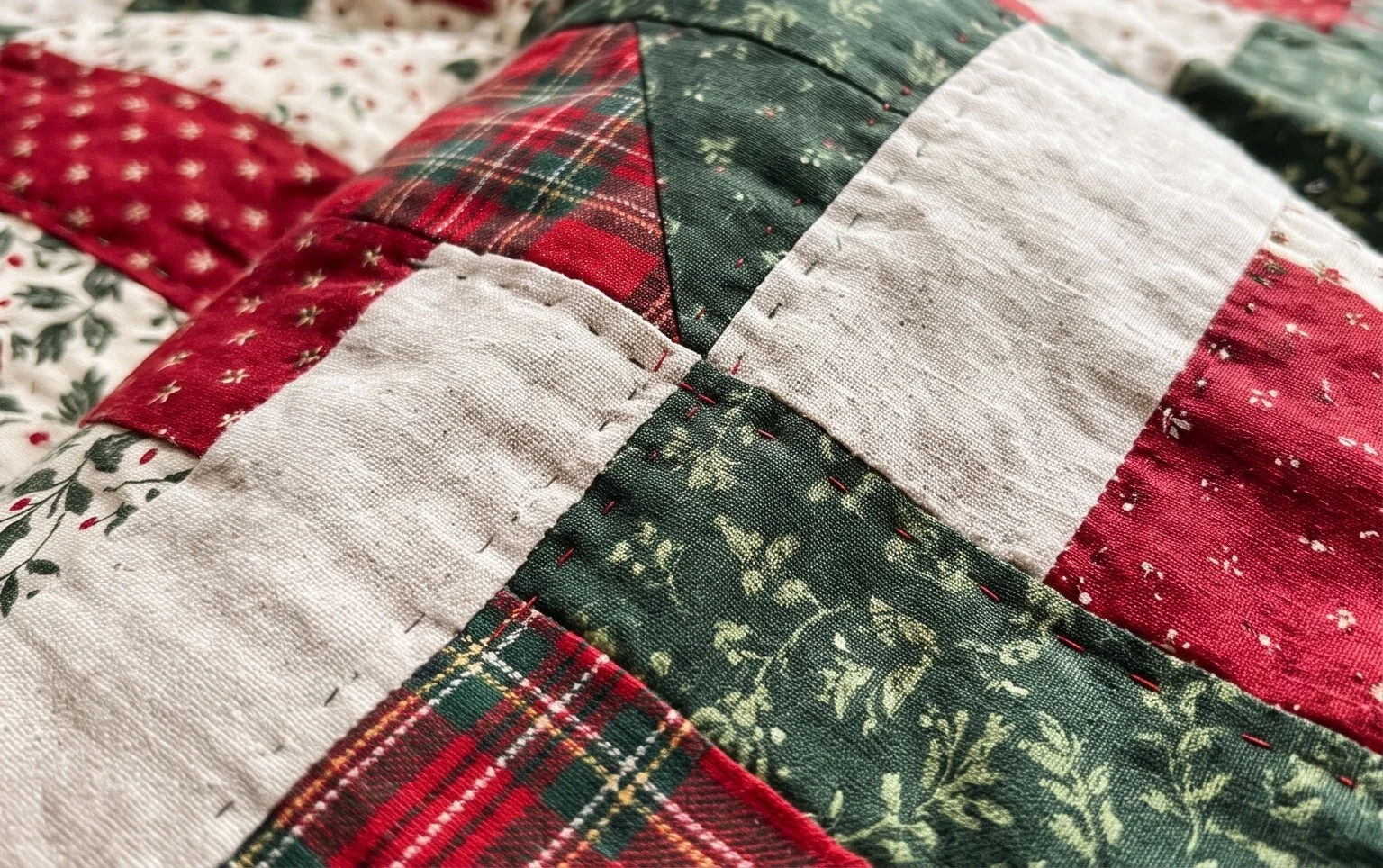
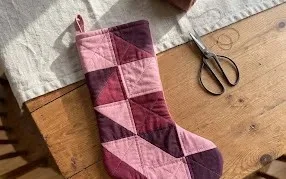
A finished Christmas quilt brings its patchwork colors and soft texture into the room each time you unfold it for a quiet evening or a holiday visit. For a simple variation, replace the traditional red and green with cream, dusty blue, and silver for a cooler winter palette. Take a photo of your finished quilt in its favorite spot and share it on Pinterest or your social media page; seeing how different makers arrange their colors is part of the fun. If you’re ready to pick up another project, explore more free patterns on the blog and find a new design to work on between holiday gatherings.