Give Your Phone a Southern Holiday Look with Draper James
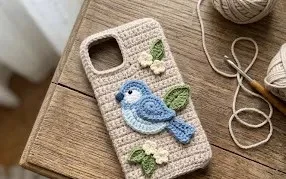
A phone screen gets a festive refresh with the Draper James Holiday 2019 backgrounds, a set of digital images with a polished, seasonal look. Download the files and use one as your lock screen or home screen when you want a little holiday color without adding another decoration to your desk or mantel. This is a quick project for beginners, gift makers, and anyone who enjoys personalizing a phone; there is no yarn, hook, or stitching involved. The article explains what the download includes and how to save and set a background on your device. You can also check the image fit and crop before applying it, so the design sits neatly around your clock and app icons.
Why You’ll Love This Pattern
A square of cotton yarn and a single crochet stitch make a useful dishcloth that can be finished in an afternoon. The dense fabric handles everyday washing, and the plain texture is easy to follow while you practise keeping your edges straight. One 32-stitch width makes counting manageable, and the simple shape is a good way to use leftover worsted cotton.
This pattern is also easy to wash and reuse. Make a small stack for your kitchen or give one with a bar of soap as a practical handmade gift. The sample review below is illustrative, not a verified customer testimonial.
The rows were easy to count, and the cotton made a firm cloth that feels comfortable in my hand.
— Mara, sample crocheter
Pattern Overview & Skill Level
- Skill Level: Beginner. You need to know how to chain and single crochet.
- Approximate Time: 2–3 hours, depending on your pace and tension.
- Construction: A flat square worked in rows of single crochet, then edged with one round of single crochet.
- Finished Dimensions & Sizing: About 6.5 × 6.5 in (16.5 × 16.5 cm), after washing and drying flat. Individual results vary with yarn, hook, and tension.
Materials & Supplies Needed
- Yarn: About 75 yd (69 m) of worsted-weight (#4) 100% cotton yarn. One color is enough; choose a smooth, washable cotton that shows stitches clearly.
- Hook Size: 5.0 mm / H-8 crochet hook. Change hook size if needed to match the gauge or to make a fabric you like.
- Notions: Tapestry needle for weaving in ends, scissors, and a ruler or measuring tape. A stitch marker is optional for marking the first stitch of the edging round.
- Substitutions: Cotton-bamboo yarn can make a softer, drapier cloth; it may stretch more when wet. A similar-weight cotton blend can also work, but check its washing instructions. Thinner or thicker yarn changes the finished size and the amount needed, so make a gauge swatch before starting.
Gauge: 16 single crochet stitches and 18 rows measure about 4 in (10 cm) square in the main fabric, measured after gently washing and drying flat. Matching gauge helps the cloth reach the stated size. If your swatch is too large, try a smaller hook; if it is too small, try a larger hook.
Stitch Guide & Abbreviations (US Terms)
- ch: Chain. Yarn over and pull through the loop on the hook.
- sc: Single crochet. Insert the hook in the stitch, yarn over and pull up a loop, then yarn over and pull through both loops.
- sl st: Slip stitch. Insert the hook, yarn over, and pull through both the stitch and the loop on the hook.
- st / sts: Stitch / stitches.
- RS: Right side, the face you choose to show.
The turning chain does not count as a stitch. Work the first single crochet into the first stitch of each row. The edging round uses one single crochet in each stitch and one extra single crochet in each corner stitch to turn neatly.
Step-by-Step Pattern Instructions
Use the same yarn and hook for the body and edging. Keep the turning chain loose enough that it does not pull the side edges inward. The stated stitch counts do not include the turning chain.
Dishcloth Body
- Foundation: Ch 33. The chain at the hook does not count as a stitch.
- Row 1: Sc in the second ch from the hook and in each ch across; ch 1, turn. (32 sts)
- Rows 2–32: Sc in each st across; ch 1, turn. (32 sts each row)
After Row 32, fasten off and leave a tail of about 6 in (15 cm) for weaving in. Lay the piece flat before edging. If it measures much more or less than 6.5 in square, check your gauge and consider adjusting the hook size before making another cloth.
Edging
- Round 1: With the RS facing, join yarn with a sl st in any corner stitch. Ch 1, then work sc evenly around the cloth. Put 3 sc in each corner stitch and work 1 sc in each of the remaining stitches and along the row ends, spacing the side stitches evenly. Join with a sl st to the first sc. (140 sts)
For the edging count, work 32 stitches along each top and bottom edge, including the corner stitches, and 38 stitches along each side edge, including its two corners. That gives 140 stitches around the cloth. If the sides ruffle, use fewer stitches along the row ends; if they draw inward, add stitches there while keeping the corners defined.
Finishing
Fasten off and thread the tail onto a tapestry needle. Weave it through the back of several stitches, change direction, and weave through a few more so it stays secure. Weave in the foundation tail the same way. Wash the cloth according to the yarn label, then lay it flat and square the corners while it dries.
Care & Washing Instructions
- Wash cotton in cool or warm water, up to 40°C (104°F), unless the yarn label gives different directions.
- Dry flat for a more even square; avoid high heat, which can shrink or roughen some cotton yarns.
- Reshape the damp cloth by gently smoothing its edges and corners; blocking is optional for this everyday item.
Pro Tips & Common Mistakes to Avoid
- Keep your tension even, especially across the foundation chain. If that edge is tighter than the rest, use a slightly larger hook just for the chain or make each chain more loosely.
- Count all 32 stitches after every row. A stitch marker in the first stitch can help you spot the row edge and avoid accidentally skipping the last stitch.
- Weave in ends with a tapestry needle, changing direction once or twice. A short tail tucked through only one row can work loose after repeated washing.
- To make a wider or longer cloth, add chains or rows in small increments. Each extra stitch or row uses more yarn; changing the stitch count also changes the finished dimensions, so check the fabric against a ruler as you work.
Frequently Asked Questions
Can I use acrylic yarn instead of cotton?
You can, but acrylic may be less absorbent and can feel warmer or softer than cotton. For a dishcloth used to wipe up water, cotton is the more practical choice. Follow the yarn label for washing and drying.
How can I make the dishcloth larger or smaller?
For a wider cloth, begin with more or fewer chains, keeping an even number of stitches in the pattern, and work the same number of single crochets across each row. Add or remove rows to change the length. A larger cloth uses more yarn, and a smaller one uses less.
Is this pattern suitable for a first crochet project?
Yes, if you are comfortable making chains and single crochet stitches. The main challenge is keeping 32 stitches in every row. Count as you go and check that both side edges stay straight before continuing.
May I sell dishcloths made from this pattern?
Check the designer’s terms before selling finished items. If you sell handmade goods, describe the yarn and care instructions accurately, and do not claim the pattern itself as your own.
Once one of the Draper James holiday images is set on your phone, the screen has a neat seasonal update you can change again in a few taps. Try a different background from the collection, or crop the same image to suit your lock screen and home screen layouts. If you use one, share a screenshot on Pinterest or your favorite social platform so other readers can see how it looks on your device. Then browse the blog for more free patterns and digital projects to make or download when you have a spare moment.