Free Amigurumi Reindeer Pattern: Easy Step-by-Step Guide
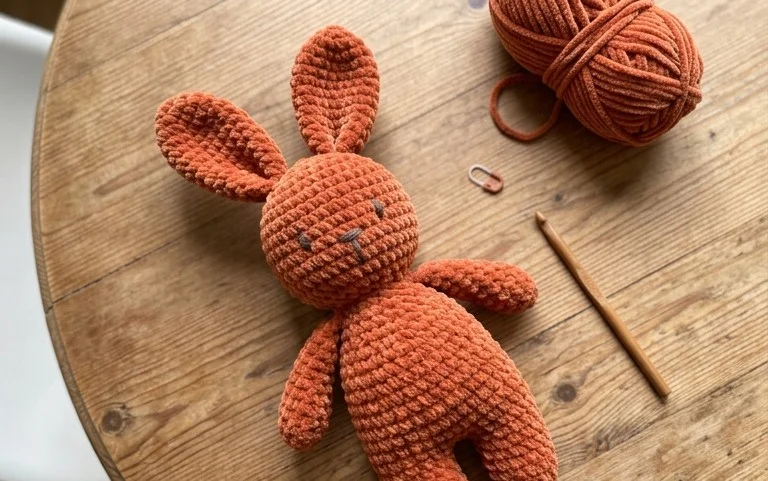
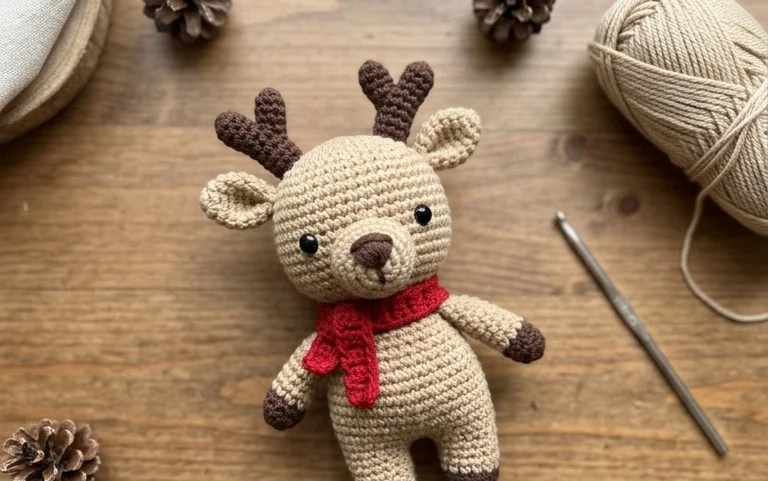
This tiny woodland friend sits right in the palm of your hand, featuring a soft, rounded shape and upright antlers that give it a friendly character for any holiday shelf. Its firm construction comes from working in a tight spiral, a technique that prevents stuffing from peeking through the gaps in your stitches. Beginners find this project approachable because it relies on standard increases and decreases to shape the head and body. Making this toy feels rewarding as the familiar silhouette appears after just a few hours of work. You will learn to manage small-scale tension and attach limbs securely for a durable finish.
Why You’ll Love This Pattern
This classic crochet dishcloth relies on the durable linen stitch, which creates a dense yet flexible fabric that excels at scrubbing stubborn dishes. Because the pattern uses basic single crochet and chain stitches, it works up quickly in a single evening while you watch a movie. The texture is intentionally firm, ensuring the cloth does not stretch out of shape after multiple uses in soapy water. Using 100% cotton yarn provides the necessary absorbency for kitchen cleanup, and the small size makes it a portable project that fits easily into a purse or project bag.
I finished this dishcloth in two hours and the texture is much better than the store-bought ones I usually buy. It holds up perfectly in the wash without fraying.
— Sarah, home crafter
Pattern Overview & Skill Level
- Skill Level: Beginner
- Approximate Time: 1.5 to 2 hours
- Construction: Worked in flat rows starting from a foundation chain
- Finished Dimensions: 8 inches by 8 inches
Materials & Supplies Needed
- Yarn: Worsted weight (#4) 100% cotton yarn, approximately 75 yards.
- Hook Size: 5.0 mm (H-8).
- Notions: Tapestry needle for weaving in ends, scissors.
- Safe yarn substitutions: You may use a cotton-acrylic blend, though it will be slightly less absorbent than 100% cotton. Avoid wool, as it is not suitable for high-heat dishwashing and may felt.
Stitch Guide & Abbreviations (US Terms)
- ch: Chain
- sc: Single crochet
- st/sts: Stitch/stitches
- sk: Skip
- Linen Stitch: Also known as moss stitch; a pattern of alternating single crochet and chain stitches where the single crochet is worked into the chain space of the previous row.
Step-by-Step Pattern Instructions
This dishcloth is worked flat. You will start with a chain and build the linen stitch pattern row by row.
Foundation: Ch 31.
Row 1: Sc in the 4th ch from the hook, *ch 1, sk 1 ch, sc in the next ch. Repeat from * across to the end. Turn. (15 sc, 14 ch-1 spaces)
Row 2: Ch 2, sk the first sc, sc in the first ch-1 space, *ch 1, sk the next sc, sc in the next ch-1 space. Repeat from * across, finishing with a sc in the turning chain space. Turn. (15 sc, 14 ch-1 spaces)
Rows 3-30: Repeat Row 2.
Finishing: Fasten off, leaving a 6-inch tail. Use your tapestry needle to weave the tail back and forth through the stitches on the back side of the work to secure it. Trim any excess yarn close to the fabric.
Care & Washing Instructions
- Machine wash on a warm cycle with like colors to prevent dye transfer.
- Tumble dry on low heat or lay flat on a towel to air dry to prevent shrinkage.
- If the cloth becomes distorted from use, dampen it with water, pull it into a square shape, and let it dry flat to reset the tension.
Pro Tips & Common Mistakes to Avoid
Maintaining consistent tension is the most important factor in this pattern. If your chains are too tight, the finished cloth will be stiff and difficult to work into; if they are too loose, the holes will be overly large. Use a stitch marker on the first stitch of every row to ensure you do not accidentally drop stitches at the edges, which is a common error for beginners. When weaving in your ends, ensure you catch the yarn under at least three different stitches to prevent the ends from popping out during machine washing. If you want to increase the size of the dishcloth, simply increase your starting foundation chain by any odd number, which will require additional yarn.
Frequently Asked Questions
Can I use a larger hook for this pattern?
Using a larger hook will make the fabric looser and more open, which may make the cloth less effective for scrubbing. Stick to the 5.0 mm hook for the tightest, most durable results.
Is this pattern suitable for complete beginners?
Yes, this is an ideal first project. It teaches you how to keep edges straight and how to work into chain spaces, which are foundational skills for many intermediate projects.
Can I sell the dishcloths I make from this pattern?
You are welcome to sell physical items made from this pattern as long as you credit the design. Do not sell or distribute the pattern document itself.
What happens if my stitch counts are off?
If your stitch counts are off, the edges will begin to slant or grow wider. Count your stitches at the end of every row to ensure you have 15 single crochets; if you find an error, unravel back to the previous row and correct it before moving forward.
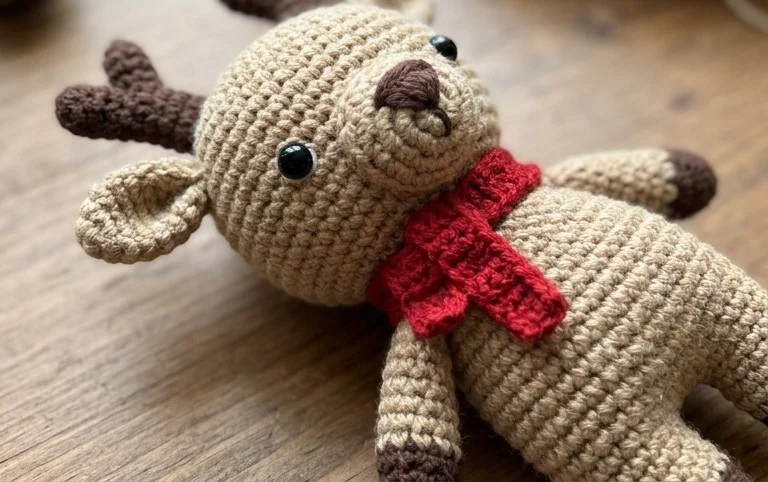
Your new holiday companion looks charming perched on a mantle or tucked into a gift basket for a neighbor. Try swapping the traditional brown yarn for a soft silver or cream wool to create a unique winter forest theme for your home decor. Sharing a photo of your finished work helps others see how different color choices change the final look of the piece. I love seeing the variety of personalities you give these creatures through subtle embroidery on the eyes and nose. Check out the rest of the blog for more animal designs you can craft this weekend.