Easy Crochet Gift Bags: Free Patterns for Thoughtful Giving
A small crochet gift bag turns a few yards of yarn into useful wrapping that can be reused long after the gift is opened. The finished bags have a soft, handmade texture, and drawstrings or simple handles keep treats and small presents tucked inside. This collection suits beginners who want to practice basic stitches as well as experienced makers preparing several gifts for a birthday, holiday, or party. You can choose a plain design for quick gifting or add stripes and color changes for a personal touch. The patterns show how stitch choice affects the fabric, how to shape a bag from the base upward, and how to finish the top neatly. Cotton yarn makes a sturdy bag, while a lighter yarn gives it a softer drape. Each project is small enough to finish in an evening and satisfying to fill with something thoughtful.
Why You’ll Love This Pattern
A firm cotton crochet dishcloth is useful at the sink, easy to wash, and small enough to finish in an afternoon. This flat pattern uses single crochet throughout, so you can focus on keeping the edges straight rather than learning several stitch combinations. One ball of cotton yarn is enough, and the simple shape works well for practicing even tension before moving on to larger projects.
The close fabric holds up to regular use, while the plain rows make it easy to spot missed stitches. It is also a practical handmade gift: fold the finished cloth and pair it with a bar of soap or a kitchen towel.
The rows were easy to keep track of, and the cotton made a sturdy cloth. I finished mine in one evening.
— Maya, weekend crocheter
Pattern Overview & Skill Level
- Skill Level: Beginner. You need to chain and make single crochet stitches.
- Approximate Time: 1–2 hours, depending on your pace and how often you pause to count.
- Construction: A flat rectangle worked back and forth in rows, then finished with a simple border and woven-in ends.
- Finished Dimensions & Sizing: About 7.5 × 6.7 inches (19 × 17 cm) after washing and drying flat, based on the gauge below. Cotton yarn and individual tension can change the final size.
Materials & Supplies Needed
- Yarn: About 55 yards (50 m) of worsted-weight (#4) 100% cotton yarn. One solid color is enough; choose a shade that can tolerate frequent washing.
- Hook: 4.5 mm / US 7 crochet hook. Adjust the hook if needed to match gauge.
- Notions: Tapestry needle for the yarn tails, scissors, and a ruler or tape measure. A removable stitch marker can mark the first stitch of a row.
- Gauge: 16 single crochet stitches and 18 rows measure 4 inches (10 cm) after washing and drying flat. Make a small swatch first; a smaller hook makes firmer fabric, while a larger hook makes a looser cloth.
- Substitutions: A similar-weight cotton-linen blend is suitable, though it may feel less soft and can drape differently. Avoid acrylic for a dishcloth intended for absorbency. If you use a different yarn weight, the cloth size and yardage will change, so check gauge and make a new chain length if needed.
Stitch Guide & Abbreviations (US Terms)
- ch: Chain.
- sc: Single crochet. Insert the hook into the indicated stitch, yarn over and pull up a loop, yarn over again and pull through both loops.
- st(s): Stitch or stitches.
- rep: Repeat.
- turn: Rotate the work to begin the next row.
The turning chain does not count as a stitch in this pattern. Work the first single crochet into the first stitch of each row, not into the turning chain. This keeps the edges even and maintains 30 stitches across.
Step-by-Step Pattern Instructions
Dishcloth
- Foundation: Ch 31. Keep the chain relaxed so the starting edge does not pull in.
- Row 1: Sc in the second ch from the hook and in each ch across. Turn. (30 sts)
- Row 2: Ch 1, sc in each st across. Turn. (30 sts)
- Rows 3–10: Rep Row 2 eight times. Each row has 30 sc. (30 sts per row)
- Rows 11–20: Rep Row 2 ten times. Keep checking that the first and last stitch are worked; each row has 30 sc. (30 sts per row)
- Rows 21–30: Rep Row 2 ten times. The rectangle should measure close to 6.7 inches tall when laid flat. (30 sts per row)
Border and Finishing
Do not add a border stitch by stitch in this version, as a border can make the edges ripple if too many stitches are placed along the sides. Fasten off, leaving a 6-inch tail. Thread the tail onto a tapestry needle and weave it through the backs of several stitches. Change direction once, then trim the remaining yarn close to the fabric. Weave in the starting tail in the same way.
Wash and dry the cloth before measuring its final size. If the edges curl, dampen it and lay it flat, smoothing the corners and sides with your hands. The single crochet fabric should settle into a neat rectangle after drying.
Care & Washing Instructions
- For cotton yarn, machine wash with like colors in warm water, up to 40°C (104°F), or follow the yarn label if it gives a lower limit.
- Dry flat when possible; reshape the corners while the cloth is damp to reduce curling.
- Blocking is usually unnecessary for a dishcloth, but smooth it flat after washing; follow the yarn label if you use a blend or substitute fiber.
Pro Tips & Common Mistakes to Avoid
- Keep the foundation chain loose. If it is much tighter than the rows, the lower edge will pucker; try a hook one size larger just for the chain if needed.
- Count 30 stitches at the end of every row. Place a stitch marker in the first stitch if you tend to miss the edge stitch when turning.
- Do not crochet into the turning chain. It is only there to bring the yarn to the height of the next row and is not part of the stitch count.
- To change the width, add or remove foundation chains, then work one single crochet into each chain after the first. A wider or longer cloth uses more yarn; check that the finished fabric still feels flexible enough to wring out.
Frequently Asked Questions
Can I use a different yarn fiber?
For a useful dishcloth, cotton is the best choice because it absorbs water and tolerates repeated washing. A cotton-linen blend can work, but it may feel firmer. Acrylic is less absorbent, so the cloth may not perform as well at the sink.
How can I make the cloth larger or smaller?
Change the foundation chain to adjust the width, then add or remove rows to adjust the height. Keep the same single crochet fabric and check the measurements as you work. Larger dimensions require more yarn than the approximate 55 yards listed.
Is this pattern suitable for a first crochet project?
Yes. It uses only chains and single crochet stitches, with no increases, decreases, or shaping. The main beginner challenge is working the first and last stitch of every row so the sides stay straight.
May I sell dishcloths made from this pattern?
Check the designer’s terms before selling finished items, and follow any credit or product-labeling requests. The yarn label may also include guidance for selling items made with that yarn.
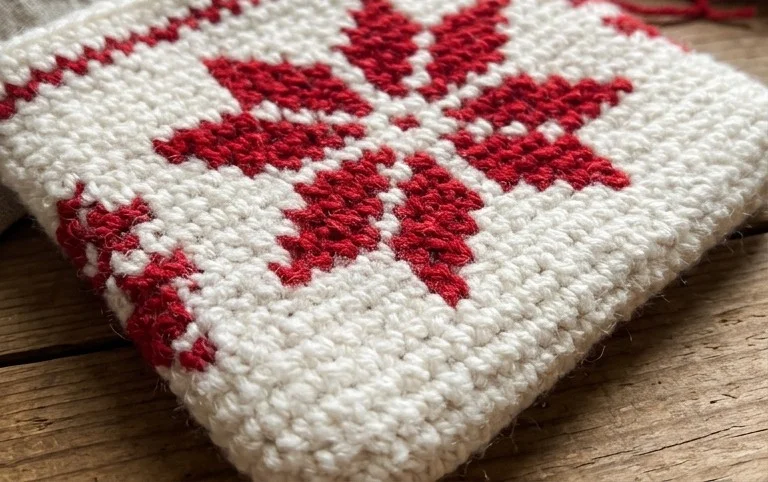
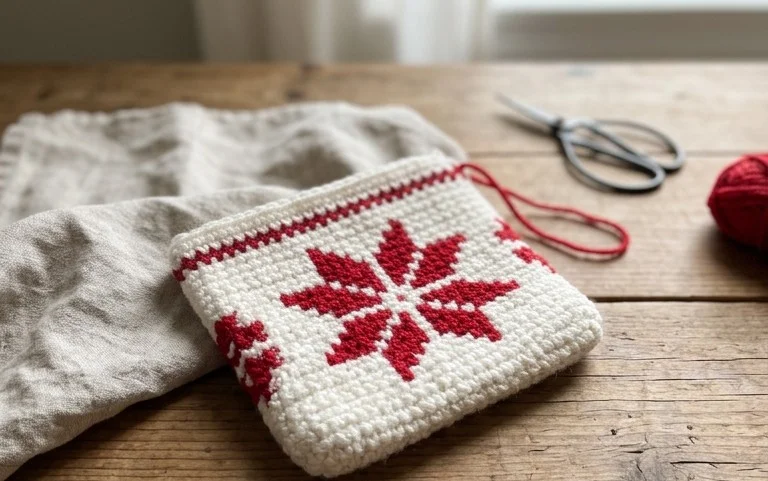
A finished crochet gift bag gives a small present a handmade wrapper that can be used again for jewelry, candies, or keepsakes. If you want to change the look, work the bag in two colors or make the base a little wider to fit a larger gift. Cotton yarn gives the fabric a firm feel, while a softer yarn makes a relaxed pouch. Check that the drawstring slides freely before tying it, and weave in the ends so the bag is ready to give. Share a photo of your finished project on Pinterest or your favorite social media page; seeing the colors and details you chose is part of the fun. When you’re ready for another small project, explore more free crochet patterns on the blog, including practical makes and gifts for different occasions.