Easy Cat Christmas Stocking Crochet Pattern for Beginners
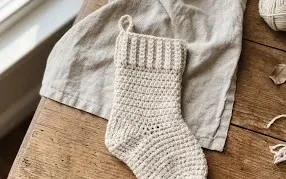
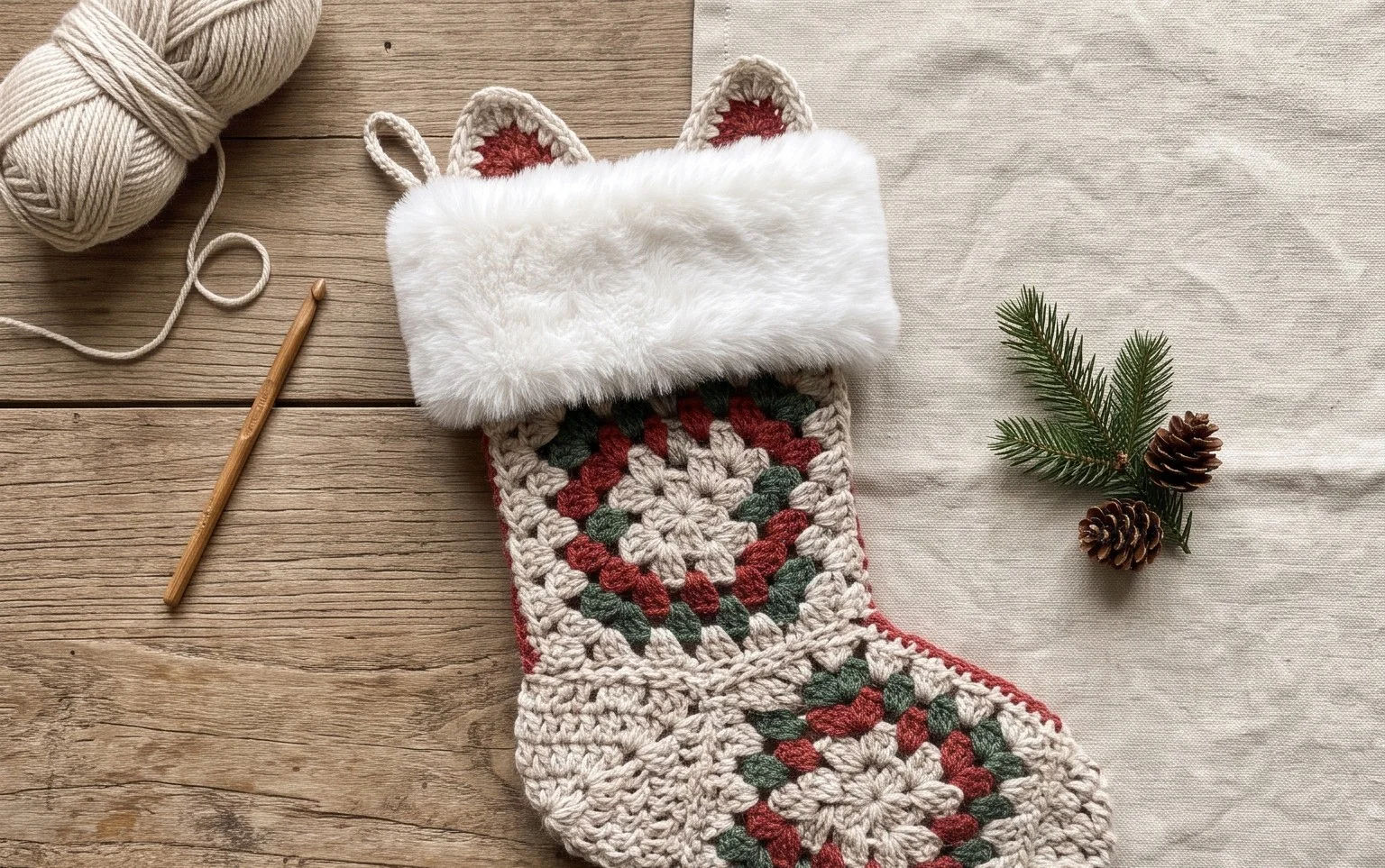
Soft yarn, pointed ears, and a little cat face give this Christmas stocking a playful look that stands out on a mantel or beside a child’s bed. The finished piece has the familiar shape of a holiday stocking with a feline twist, and its crocheted fabric feels warm and substantial in your hands. It suits beginners who are comfortable with basic stitches, as well as gift makers and anyone who likes handmade seasonal decor. You’ll work through the stitch pattern and shaping at a steady pace, with clear guidance for forming the cat details and finishing the stocking neatly. Choose classic Christmas colors or use a favorite cat’s coat as your palette. The project is satisfying to make because each section adds a visible detail, and the result is a keepsake you can bring out year after year.
Why You’ll Love This Pattern
A firm, square dishcloth in smooth cotton yarn is useful at the sink and simple to make in a single crochet stitch. This beginner pattern uses one rectangle worked back and forth, so there are no increases, decreases, seams, or special shaping to manage.
The even stitches make a dense fabric that holds up to regular use, and the small size is easy to carry for crochet sessions on the sofa or during a trip. One ball of worsted cotton is usually enough, making this a practical way to use a leftover skein. A finished cloth also makes a useful housewarming gift when paired with a bar of soap or a bottle of dish liquid.
The rows were easy to follow, and I liked having a useful project I could finish over a couple of evenings. My cotton cloth came out firm and washed well.
— Nina, sample crocheter
Pattern Overview & Skill Level
- Skill Level: Beginner. You need to chain and make single crochet stitches.
- Approximate Time: About 2–3 hours, depending on your pace and experience.
- Construction: Work one flat rectangle in rows, turning at the end of each row. There is no separate border or seaming.
- Finished Dimensions & Sizing: About 8.5 inches wide by 8 inches tall when worked to gauge. Cotton and individual tension can change the final size slightly.
Materials & Supplies Needed
- Yarn: About 85 yards of worsted-weight (#4) 100% cotton yarn in one color. Cotton is absorbent and tolerates frequent washing.
- Hook Size: 5.0 mm / H-8 crochet hook. Use the hook that gives you the gauge listed below; your hook label may differ from another brand’s.
- Notions: Tapestry needle for weaving in the two yarn tails, scissors, ruler or measuring tape, and a stitch marker if you want to mark the first stitch of a row.
- Substitutions: A cotton-linen blend can work, though it may feel less soft and may grow a little after washing. Avoid acrylic if you want a dishcloth that absorbs water well. A thicker yarn makes a larger, heavier cloth and uses more yardage; a finer yarn makes a smaller, lighter cloth.
Gauge: 14 single crochet stitches and 16 rows measure 4 inches square. Make a small swatch if you need the finished cloth to match the stated dimensions. If you have more stitches per 4 inches, try a larger hook; if you have fewer, try a smaller hook.
Stitch Guide & Abbreviations (US Terms)
- ch: Chain. Yarn over and pull through the loop on the hook.
- sc: Single crochet. Insert the hook into the stitch, yarn over and pull up a loop, then yarn over and pull through both loops on the hook.
- st: Stitch.
- sts: Stitches.
Each turning chain is for height only and does not count as a stitch. At the start of a row, work the first single crochet into the first stitch of the previous row, not into the turning chain. This keeps the edges straight and the stitch count steady.
Step-by-Step Pattern Instructions
Dishcloth
Use worsted cotton and a 5.0 mm hook. The pattern is written for the gauge above. Do not count the loop on your hook as a stitch.
- Foundation: Ch 31. The first 30 chains provide one stitch for each stitch in Row 1.
- Row 1: Sc in the second ch from the hook and in each ch across. Turn. (30 sts)
- Row 2: Ch 1, sc in each st across. Turn. (30 sts)
- Rows 3–32: Repeat Row 2. At the end of Row 32, do not turn. (30 sts in each row)
You will have 32 rows total: the foundation row and 31 repeated rows. Lay the cloth flat and measure it. At gauge, it should be close to 8.5 inches wide and 8 inches tall.
Finishing
Cut the yarn, leaving a tail of about 6 inches. Pull the tail through the loop on your hook to secure it. Thread the tail onto a tapestry needle and weave it through several stitches along the edge, then change direction and weave through a few more stitches. This helps the end stay put during washing. Weave in the foundation tail the same way. Do not pull the fabric tight while hiding the ends, or the edge may pucker.
Care & Washing Instructions
- Wash cotton cloths in warm water, around 40°C / 104°F, with similar colors; follow the yarn label if it gives different directions.
- Tumble dry on low or lay flat to dry. Remove the cloth promptly if machine drying so it does not stay damp in a pile.
- While damp, smooth the edges and reshape the corners by hand. Blocking is optional for this simple rectangle.
Pro Tips & Common Mistakes to Avoid
- Keep your tension even rather than pulling each stitch tight. Tight stitches make the hook difficult to insert and can leave the cloth smaller and stiff; loosen your grip or use a larger hook if needed.
- Count the 30 stitches at the end of every row, especially near the edges. A stitch marker in the first stitch can help you find where the next row begins and prevent accidental decreases.
- When weaving in the tails, pass the needle through the backs of several stitches and change direction once. A short end hidden in only one direction may work loose with repeated washing.
- For a wider or taller cloth, add chains in multiples of one and work more rows, keeping the same number of single crochet stitches in every row. Each extra stitch or row uses more yarn, so allow additional yardage and check the fabric dimensions as you go.
Frequently Asked Questions
Can I use a different yarn fiber?
Yes, but the cloth’s use and texture will change. Cotton or a cotton-linen blend is a good choice for an absorbent dishcloth. Acrylic is less absorbent, while wool may felt or change shape with hot water and rough washing. Check the yarn label and make a swatch if you substitute.
How can I make the dishcloth smaller or larger?
For a narrower cloth, chain fewer than 31 stitches and single crochet into the second chain and each chain across. For more width, add chains. To change the height, work fewer or more rows. The dimensions and yardage will change, so measure the piece as you work.
Is this pattern suitable for a first crochet project?
Yes. It uses only chains and single crochet in straight rows, with no shaping or joining. The main task is keeping 30 stitches in each row. If the sides begin to angle, pause and count before continuing.
May I sell dishcloths made from this pattern?
Check the designer’s terms before selling finished items, and describe your work honestly. If you are selling through a marketplace or at a craft fair, follow its rules and include accurate fiber and care information for the yarn you used.
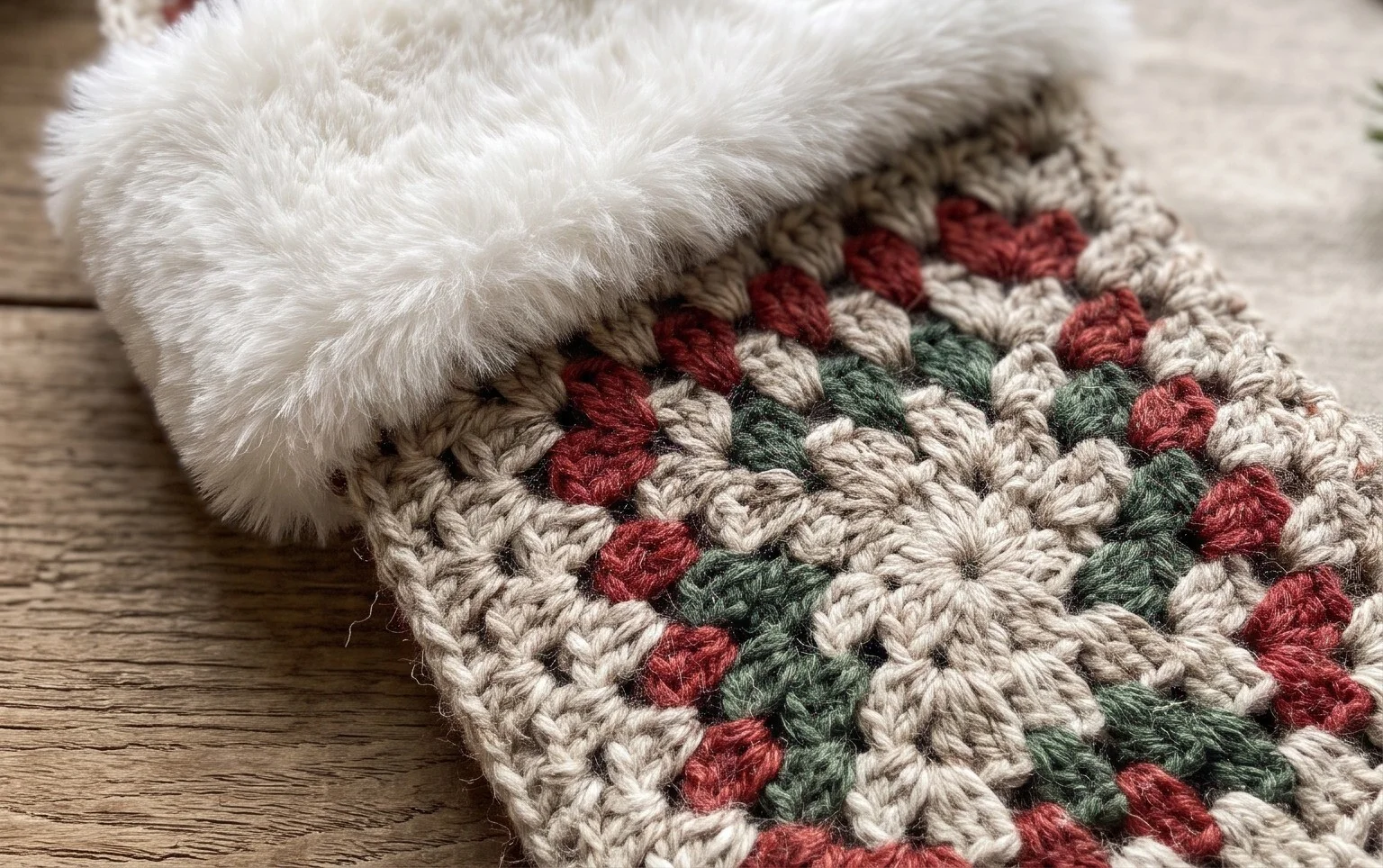
Your finished stocking brings a cheerful cat-shaped detail to holiday decorating, and it is even more special when you fill it with small treats or tuck it into a handmade gift. For a simple variation, change the yarn colors to match a tabby, black cat, or a favorite festive palette. Take a photo of your work and share it on Pinterest or your social media feed so other cat lovers can see your version. If you enjoyed making this project, browse the blog for more free crochet patterns to work on through the season. Keep your stocking stored flat between holidays, and it will be ready to hang again next Christmas.